

8 Steps for a Dog-Friendly, Free-Draining Lawn
Introduction
Installing artificial grass for pets in Dubai requires more than rolling out a synthetic surface. It demands a layered system that flushes liquid waste through a free-draining sub-base, maintains airflow beneath the turf, and withstands daily play in one of the world’s harshest climates. Pet artificial grass must feature a fully permeable backing, a free-draining aggregate foundation, an odour-neutralising infill, and tightly secured edges to prevent digging.
Unlike standard landscaping, pet lawns handle heavy concentrations of liquid waste. Urine must drain away immediately rather than sit trapped in the sub-base or backing, where intense Dubai heat can bake uric acid crystals into severe odours. This guide consolidates the eight sequential steps required to build a sanitary, long-lasting pet run, the most common installation errors to avoid, and the aftercare routine that keeps the system hygienic through the UAE summer.
What Changes When You Install Artificial Grass for Pets?
Installing artificial grass for pets differs from a standard lawn because drainage, sub-base materials, weed membrane placement, and perimeter anchoring must all handle daily animal activity and urine. Standard installations often rely on compacted sand or decomposed granite, but these materials trap pet urine and create foul smells. The weed membrane position also changes, shifting to the bottom of the excavation rather than directly beneath the turf backing.
These differences are especially important when installing artificial grass for dogs in small gardens or enclosed villa spaces. Proper preparation makes daily cleaning easier and significantly reduces the likelihood of recurring smells. The table below summarises the engineering differences between a standard decorative lawn and a pet-rated system.
| Layer / Feature | Standard Lawn | Pet Lawn |
| Base Material | Compacted sand or crusher run | Crushed rock topped with clean fine grit; zero sand |
| Membrane Position | Directly under grass backing | Under the stone base, against subsoil |
| Infill Material | Standard silica sand | Odour-absorbing zeolite infill |
| Perimeter Edging | Pins every 30–50 cm | Heavy-duty border with pins every 10–15 cm |
| Pile Height | 35 mm to 45 mm lush pile | 25 mm to 35 mm short, resilient pile |
| Concrete Drainage | Direct glue-down or perimeter glue | Raised drainage grid or dimpled mat; never glued flat |
Table 1: Engineering Differences Between Standard and Pet-Rated Artificial Lawns
Choose the Right Pet Artificial Grass First
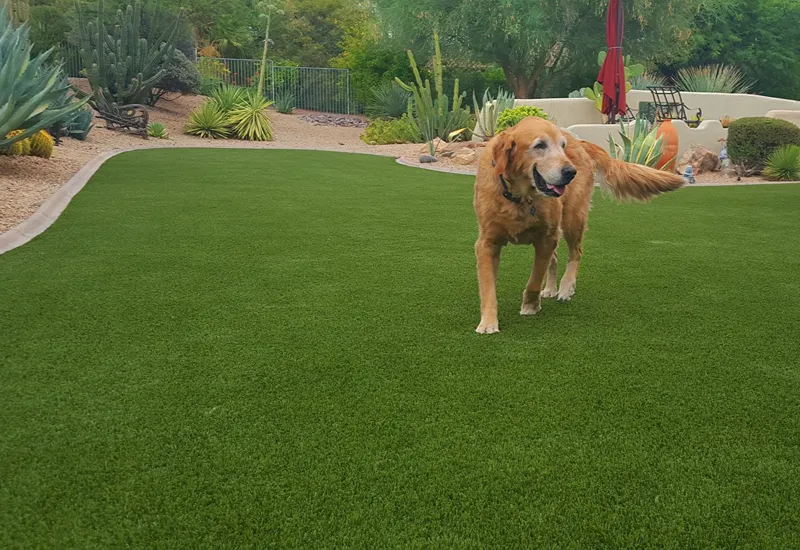
Choosing the right turf involves selecting a durable, fully permeable product with a moderate pile height of 25 mm to 35 mm. This height balances comfort underfoot, ease of solid waste removal, and resistance to flattening during active play. The turf backing must feature micro-perforations or an open mesh structure to evacuate liquids instantly into the sub-base.
Polyethylene fibres are softer underfoot and well-suited for everyday pet areas, while textured nylon offers greater stiffness and resilience for larger or more energetic dogs. High-grade antimicrobial treatments and UV stabilisers are vital in Dubai to resist solar degradation and bacterial growth. When a supplier advertises antimicrobial treatment, ask specifically what the treatment covers rather than assuming it eliminates the need for routine cleaning. A thick, attractive grass pile will not prevent odour problems if liquid cannot drain away effectively.
Tools and Materials You Need
Gathering the correct supplies before starting ensures clean seams, proper base grading, and strong anchoring across the entire pet run. The list below covers the minimum toolkit for a typical soil-based installation.
- Manual spade or mechanical turf cutter
- Heavy vibrating plate compactor
- Angular crushed stone aggregate (10–20 mm) and clean fine grit
- Solid timber, composite lumber, or galvanised steel edging
- Commercial-grade seam tape and polyurethane outdoor turf adhesive
- Galvanised steel U-pins or heavy landscape nails
- Natural zeolite pet infill
- Stiff synthetic-bristle broom
- Garden hose with high-pressure spray nozzle
- Permeable geotextile weed barrier (optional)
How to Install Artificial Grass for Pets on Soil: 8 Steps
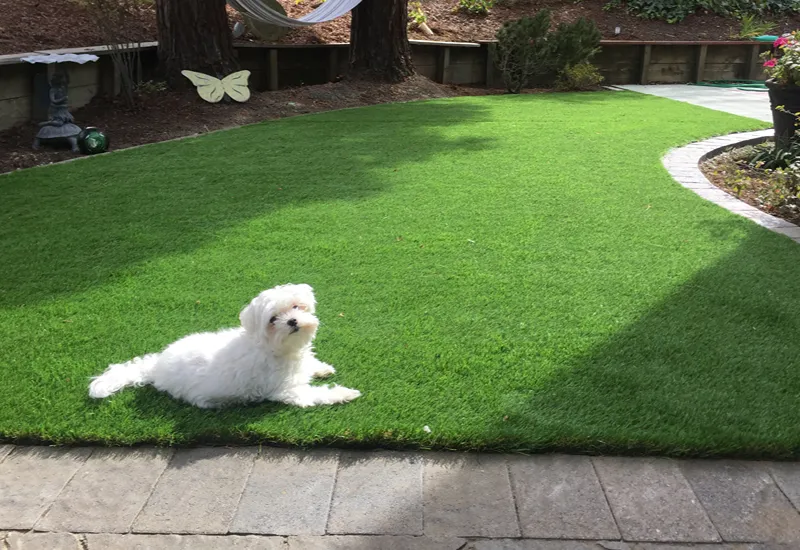
Installing artificial grass on soil requires an open-graded stone sub-base that channels pet liquids downward and secures the turf perimeter against digging paws. Follow these eight sequential steps to build a sanitary, long-lasting pet run.
Step 1: Plan the Pet Zone
Before breaking ground, map out dedicated toilet areas, shaded resting spots, and high-traffic running paths. Assess the natural run-off of the garden so liquid waste flows away from villa foundations and outdoor seating areas. Establish a continuous base slope of at least 1% toward a drainage gulley, soakaway, or gravel trench. This initial grading prevents pooling beneath the turf during deep sanitising rinses and seasonal rainfall. Keep the designated toilet area accessible for daily rinsing with a garden hose.
Step 2: Dig Out the Area
Excavate the soil to a uniform depth of 50 to 75 mm (2 to 3 inches) across the entire marked installation zone, stripping away existing turf, weed roots, and loose topsoil. Remove sharp stones, roots, and debris that could damage the sub-base profile. Level the exposed native soil bed and tamp it down firmly using a roller or hand tamper while maintaining the planned drainage direction. Verify that surrounding paths, doorways, and patio levels remain above the finished turf surface.
Step 3: Fix a Solid Border
Install pressure-treated timber battens, composite lumber, or galvanised steel edging along all outer boundaries of the pet area. Fasten the edging firmly into the ground with steel stakes driven below the finished grade. Ensure the top of the edging sits flush with surrounding patio, paving, or garden beds. A rigid perimeter border keeps the sub-base contained, supports a neat finish, and prevents dogs from clawing up the outer edges of the turf.
Step 4: Lay the Membrane Under the Base (Optional)
Placing a permeable geotextile weed barrier directly against the bare excavated subsoil stops soil from mixing into the rock while allowing liquid to pass through freely. Overlap all fabric joints by at least 100 mm so weeds cannot break through the subsoil layer. Never install a weed membrane directly beneath the grass backing, because woven fabric traps pet urine, hair, and bacteria against the turf perforations and creates lingering odours. A membrane is optional for pet lawns and should be omitted if it risks restricting drainage.
Step 5: Add and Compact a Free-Draining Base
Spread 40 to 50 mm of 10–20 mm angular crushed rock across the excavated area and compact it thoroughly with a vibrating plate compactor. Top the compacted rock with a 15 to 25 mm layer of sharp granite grit or quarry screenings to create a level, free-draining finish. Never use building sand, sharp sand, or decomposed granite in pet toilet areas, as fine sands absorb and hold urine, contributing to persistent smells. Check the finished base for soft areas or depressions before laying the turf.
Step 6: Roll Out, Cut and Seam the Turf
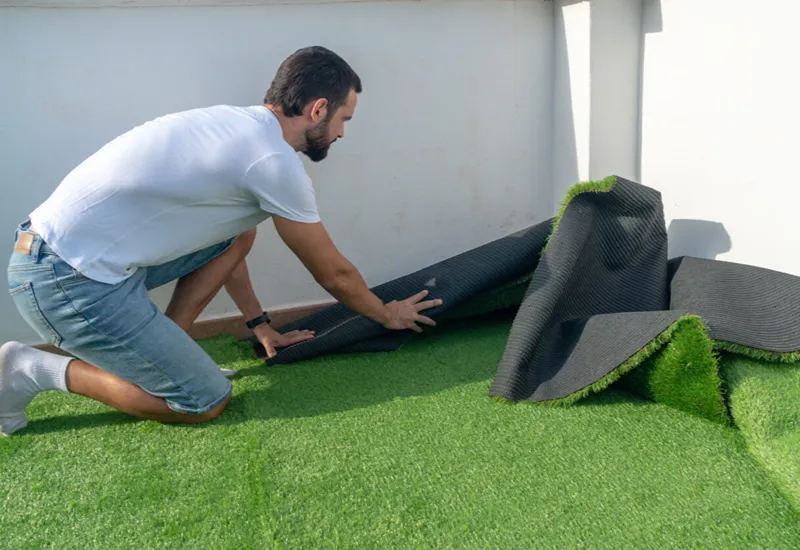
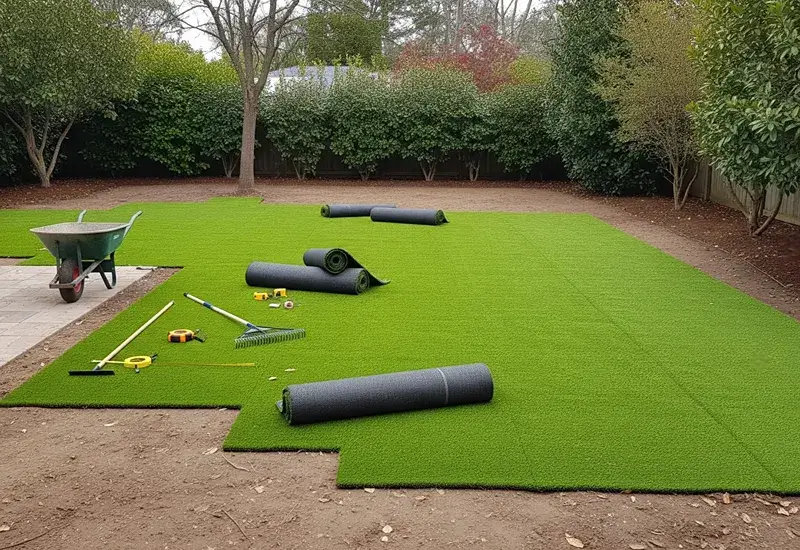
Roll out the grass with the pile direction pointing toward the main viewing angle, usually looking outward from the villa patio. Allow the rolls to relax in the Dubai sun for an hour so shipping creases fall out and the backing softens. Trim the edges to fit using a sharp utility knife, cutting carefully from the back between the stitch rows. Join seams using heavy-duty seaming tape and polyurethane turf adhesive, pressing the joints down firmly to form a tight, claw-proof bond.
Step 7: Secure the Edges Tightly
Drive galvanised U-pins or nails through the turf perimeter into the ground at intervals of 10 to 15 cm (4 to 6 inches) around the entire border to eliminate loose flaps. Hammer each pin through the backing until the head rests flush, parting the yarn blades to avoid trapping fibres underneath. Pay particular attention to corners, doorways, and areas where dogs frequently run or dig. A tightly fastened edge prevents curious dogs from gripping, chewing, or unearthing the grass edges.
Step 8: Add Pet Infill, Brush and Rinse
Distribute natural zeolite infill evenly across the grass surface using a drop spreader at the recommended rate of 5 to 8 kg per square metre. Zeolite is the preferred infill for dog runs because its honeycomb mineral structure absorbs ammonium ions and neutralises pet waste odours at a molecular level. Brush against the grain with a stiff-bristle broom to work the granules down to the base, then douse the lawn with water to settle the infill. If water collects in particular spots, investigate the drainage problem before allowing regular pet use.
Installing Pet Turf on Concrete, Balconies and Patios
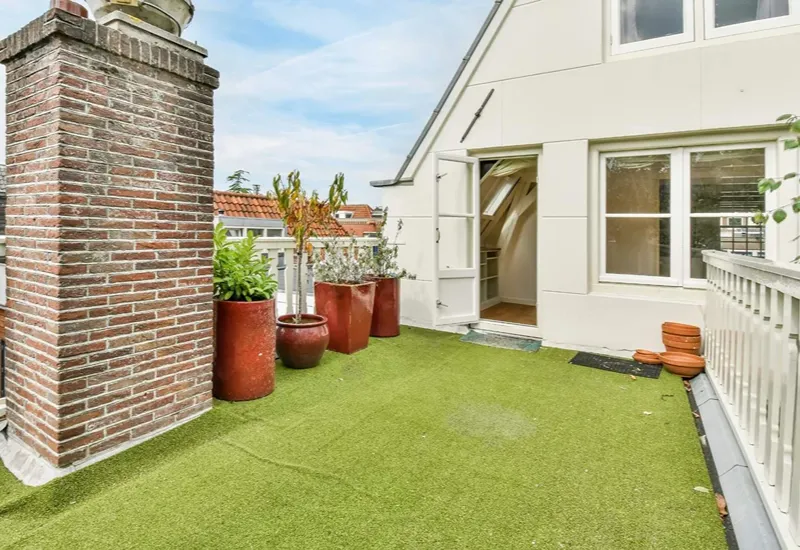
Fitting artificial grass on concrete for dogs requires an elevated drainage layer beneath the turf so liquids can escape freely toward floor drains. Unlike soil installations, concrete does not absorb liquid, making surface drainage especially important. Never glue pet grass flat onto concrete, tiles, or balcony waterproof membranes, as urine will become trapped underneath and create unmanageable odours.
Start by confirming that the underlying concrete slab has a fall leading directly to an exterior floor trap or balcony drain. Lay down interlocking plastic drainage tiles or dimpled drainage mats across the concrete floor, then trim the pet turf to fit the space and secure only the outer perimeter to the drainage grid using zip ties or perimeter tape. For indoor dog areas or enclosed balconies without floor drains, mount the grass atop a dedicated collection tray system for easy removal and cleaning.
Dubai Factors: Heat, Sand and Shade
Managing pet turf in the United Arab Emirates requires accounting for intense summer sunshine, desert sand dust, and ambient heat buildup. Synthetic fibres warm up rapidly during Dubai summers, making the surface uncomfortable for bare dog paws between midday and late afternoon. Install shade sails, pergolas, or retractable awnings over the pet run to shield the lawn from direct solar radiation, and always check surface temperature before allowing pets outside.
A light rinse with fresh water for thirty seconds before letting pets out uses evaporative cooling to lower surface temperatures immediately; however, water alone cannot keep the surface comfortable throughout a hot afternoon. Desert dust storms regularly deposit fine silts that settle into the turf fibres and block backing perforations. Rinsing and brushing the turf weekly clears desert dust, preserves fluid drainage channels, and maintains UV resistance against long-term solar degradation.
5 Mistakes to Avoid When Installing Artificial Grass for Dogs
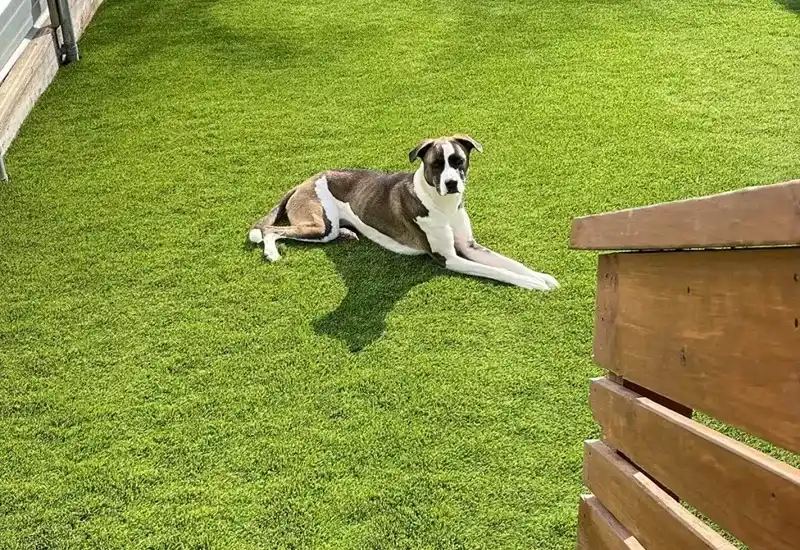
Avoiding common installation errors preserves the sanitation and lifespan of the dog run. The five issues below are the most frequent causes of recurring odour, drainage failure, and turf damage reported in UAE pet installations.
- Sand infill in toilet zones: Ordinary silica sand absorbs urine like a sponge, holding uric acid crystals near the surface and causing offensive smells during hot weather. Use zeolite in all pet toilet zones.
- Weed membrane directly beneath the turf: A membrane placed against the turf backing traps moisture, hair, and bacteria, blocking drainage channels. Position it under the crushed-stone base only.
- Flat base without drainage fall: A poorly graded base allows wastewater and urine to pool beneath the sub-base, turning the subsoil sour. Plan a 1% slope toward an outlet before compacting the foundation.
- Loose edges and wide pin spacing: Wide pin spacing and unsecured seams give dogs an open invitation to dig, bite, pull up edges, and tear the synthetic backing. Use pins every 10–15 cm.
- Concrete glue-down without drainage: Attaching turf flat onto concrete seals pet urine between the backing and the hard surface, creating a toxic layer that cannot be flushed away. Always use a raised drainage layer.
Aftercare in the First Weeks
Caring for fresh pet turf in the initial weeks establishes good hygiene habits and keeps the sub-base flowing freely. Flush the dog’s favourite toilet spot daily using a garden hose to drive urine into the stone base before it dries. Remove solid waste promptly and wash the affected area with clean water.
Apply a pet-safe enzymatic cleaner once a week across the entire run to break down organic proteins and bacteria naturally. Enzyme cleaners digest uric acid crystals rather than masking odours with temporary perfumes. Brush the grass fibres against the grain every few weeks to keep blades upright and remove loose pet hair. Inspect the turf after heavy wash-downs and top up zeolite infill around high-activity zones if the level has dropped below the supplier’s recommended depth.
DIY or Professional Pet Turf Installation in Dubai?
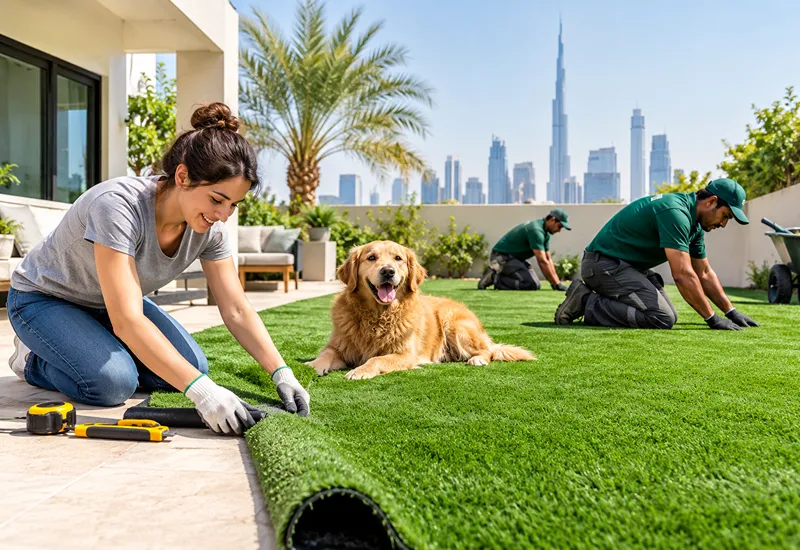
Deciding between DIY work and hiring a professional depends on the complexity of drainage requirements, ground conditions, and project size. Straightforward square runs on level soil can be managed by handy homeowners with proper compaction equipment. However, complex balcony layouts, concrete drainage mats, large villa dog runs, and sloping terrain benefit from experienced pet turf installation teams who understand local sub-base dynamics.
Professional installation ensures correct grading, tight seams, and guaranteed perimeter security against destructive chewers. Incorrect base preparation may lead to unpleasant smells and expensive adjustments later. For site surveys, free area measurements, and bespoke quotations across the UAE, contact Dubai Artificial Grass on +971 50 637 9229, email info@dubaiartificialgrass.ae, or visit the showroom in Al Quoz 1, Dubai.
Frequently Asked Questions
Can you install artificial grass for dogs?
Yes. Artificial grass can be installed for dogs provided the system uses pet-specific turf with a fully permeable backing, a free-draining crushed-stone base, zeolite infill in toilet zones, and tightly anchored edges. This layered design lets urine drain freely without pooling or damaging the turf.
What is the best base for artificial grass for dogs?
The best base is a compacted 10–20 mm crushed-stone aggregate topped with a layer of sharp granite grit or quarry screenings. This open-graded structure allows urine and rinse water to filter straight into the ground. Avoid sharp sand and decomposed granite in pet toilet areas because they trap moisture and absorb urine.
What infill is best for pet artificial grass?
Zeolite is the preferred infill for dog toilet zones. It is a natural volcanic mineral whose honeycomb structure captures ammonium ions and neutralises pet waste odours at a molecular level. Standard silica sand traps urine, while rubber infill absorbs excessive desert heat and is unsafe if accidentally ingested.
Do you need a weed membrane under pet artificial grass?
A weed membrane is optional. If used, it must be installed beneath the stone base, directly against the subsoil — never directly under the turf backing. Placing fabric right under the grass traps urine, hair, and bacteria against the backing perforations, causing severe odours.
Can you put pet artificial grass on a balcony or concrete?
Yes, by installing an interlocking plastic drainage cell or dimpled drainage mat directly beneath the turf. The mat raises the backing so urine and rinse water flow underneath toward floor drains. Never glue pet grass flat onto concrete surfaces, as trapped moisture creates persistent odours.
What pile height is best for dogs?
A pile height between 25 mm and 35 mm is ideal. This shorter pile resists matting from running paws, makes solid waste pickup straightforward, and allows rinse water to reach the backing quickly. Taller decorative piles flatten under heavy pet traffic and make waste removal difficult.