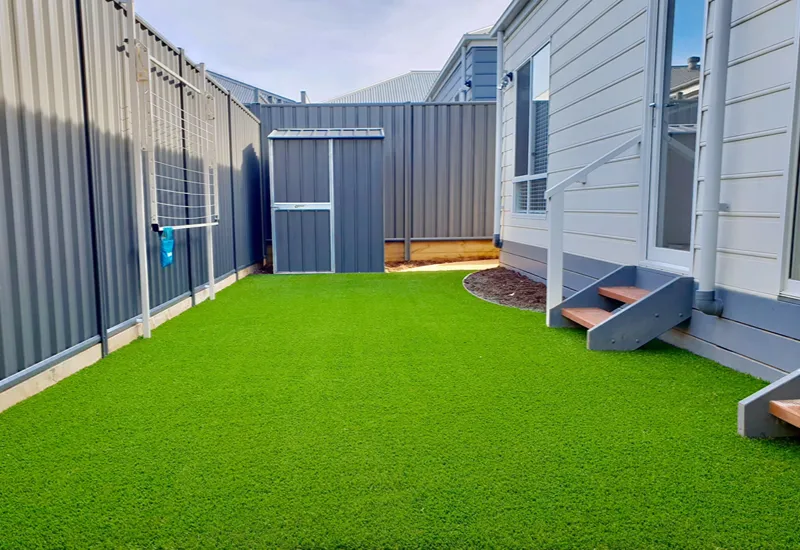


Walk through any Dubai villa community in 2027 — Emirates Hills, Dubai Hills, Arabian Ranches, District One — and you will notice something changing. The manicured natural lawns that once defined luxury villa living are quietly being replaced by artificial grass. This is not a budget-driven compromise. It is a considered decision by homeowners who have done the maths on water bills, maintenance time, and the simple reality that natural grass in Dubai’s climate is a fight against nature that most people eventually lose.
The switch is happening for ten specific reasons, and each one is backed by real numbers, real Dubai conditions, and real homeowner experience. Whether you are weighing up a balcony installation in Marina or a full villa garden in Emirates Hills, these are the reasons that tip the decision for most Dubai homeowners in 2027.
The 10 Reasons
1. Dubai’s Natural Grass Dies Every Summer
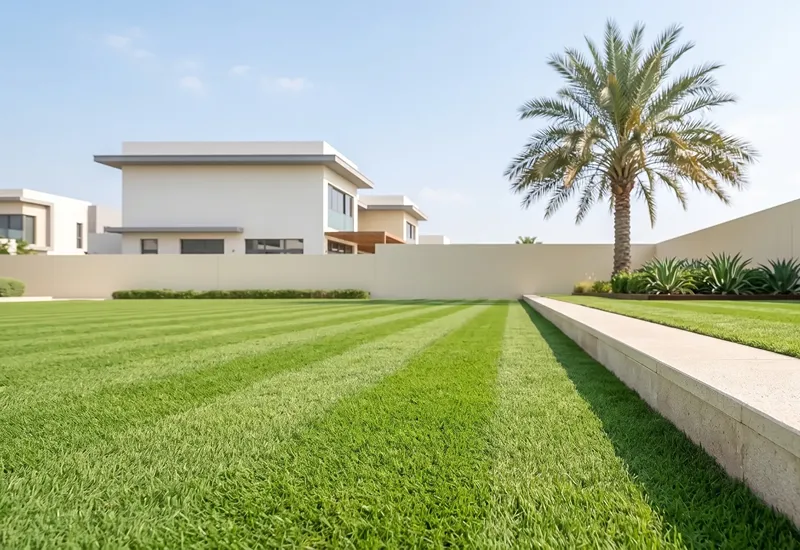
Natural grass in Dubai faces a climate that is genuinely hostile to its survival. Summer temperatures regularly exceed 45°C, direct UV radiation is among the highest in the world, and humidity swings between bone-dry indoors and saturated coastal air outdoors. A natural lawn that looks beautiful in November is brown, patchy, or dead by July — and the cost of bringing it back to green every autumn is significant.
Artificial grass does not brown, does not patch, and does not die. UV-stabilised synthetic yarn holds its colour through years of direct Dubai sun, and the backing tolerates the surface heat without degrading. The lawn that looks green in November looks the same the following July, and the July after that. For homeowners tired of watching their garden die every summer, this single fact is often the reason they switch.
2. The Water Bill Math Finally Makes Sense
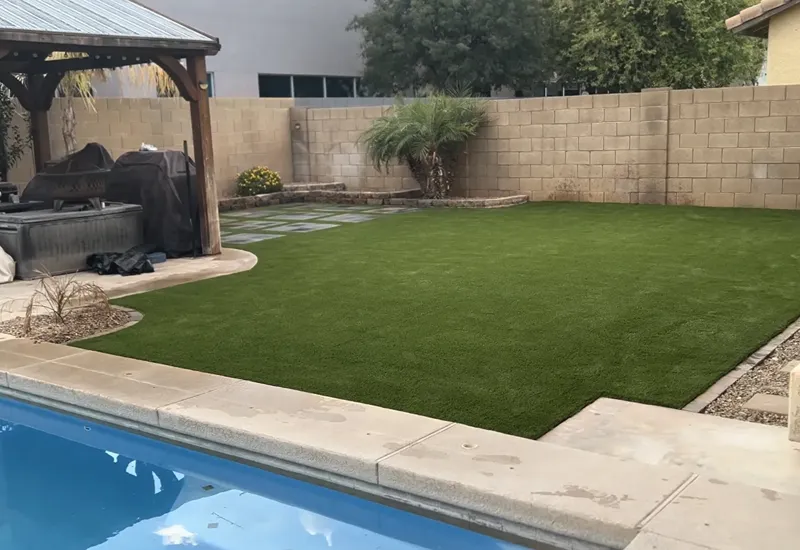
A typical Dubai villa lawn of 50 square metres needs roughly 200 to 300 litres of water per day to stay green through the summer — that is 6,000 to 9,000 litres per month, or 72,000 to 108,000 litres per year. At Dubai’s water tariffs, that translates to a meaningful annual cost that most homeowners underestimate until they see the summer DEWA bill.
Artificial grass needs zero water to stay green. The only water it ever uses is an occasional rinse to remove dust, which is a fraction of what natural grass demands. For a villa owner spending thousands of dirhams a year on lawn irrigation alone, the payback period on an artificial grass installation can be as short as three to five years, after which the savings are real and recurring. In a city where water is a costly and precious resource, this is both a financial and an environmental argument.
3. Zero Mowing, Zero Gardener Visits
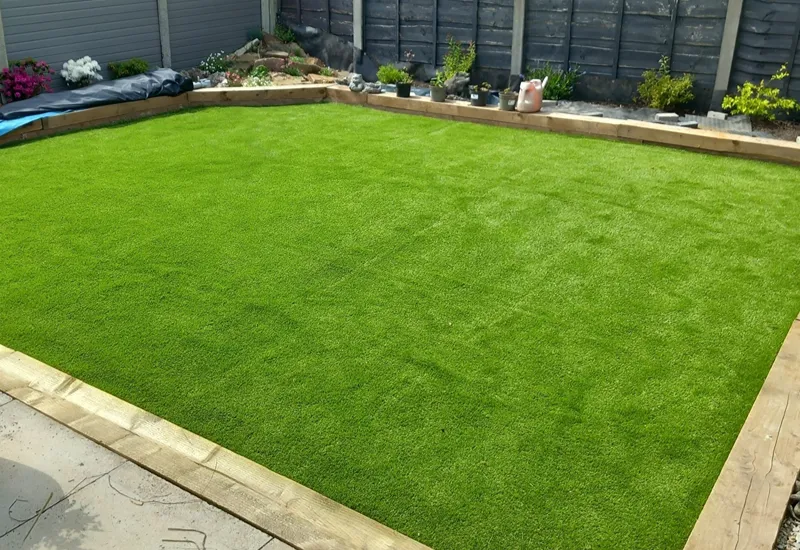
Natural grass in Dubai’s growing season needs mowing every one to two weeks. That means either owning and maintaining a mower, or paying a gardener to visit regularly — a cost that adds up over a year and a scheduling inconvenience that never goes away. The gardener arrives at 7am, runs a petrol mower under your bedroom window, and leaves clippings on the tile that take another hour to clean.
Artificial grass never needs mowing. Ever. The time and money saved on gardener visits, mower maintenance, and clipping cleanup is genuine and immediate. For busy professionals and frequent travellers who are not home to supervise garden maintenance, this is one of the most practical reasons to switch. The grass looks the same on the day you return from a two-week trip as it did the day you left.
4. It Handles Dubai Sand Better Than Natural Grass
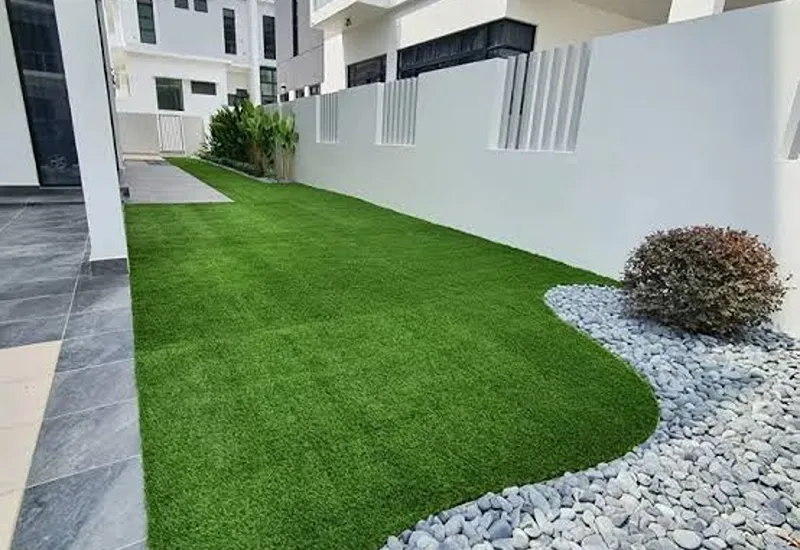
Dubai’s airborne sand is a universal cleaning challenge, and natural grass traps it at the base of the blades where it is almost impossible to remove. Over time, the sand builds up, the grass suffocates, and the lawn develops bare patches where the sand has killed the root system. Removing the sand means raking, which damages the grass further.
Artificial grass lets sand sit on the surface, where a stiff broom or a leaf blower removes it in minutes. The sand does not embed in the roots because there are no roots. A weekly brush keeps the surface clean and the colour vivid — a five-minute job versus the multi-hour ordeal of cleaning sand from natural turf. For homes near open desert or on main roads where sand blows in daily, this is a genuinely significant advantage.
5. The Upfront Cost Is Lower Than Most People Think
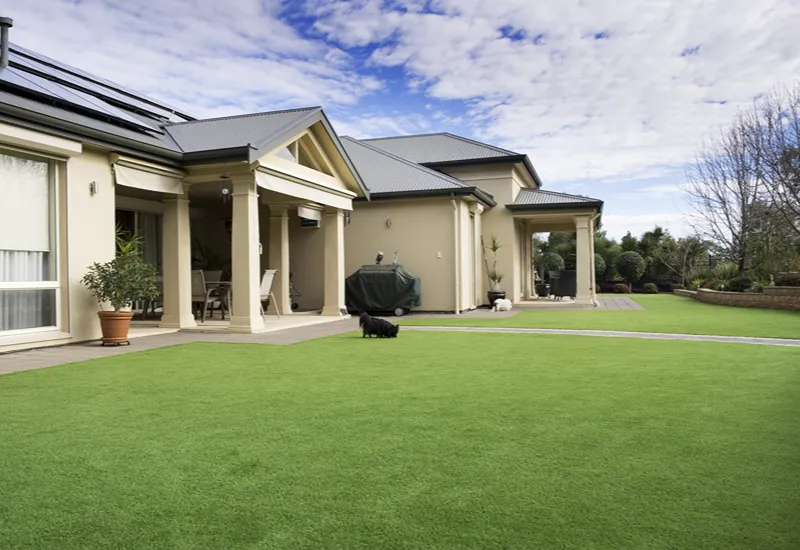
The most common objection to artificial grass is cost, and the most common mistake is comparing only the upfront price without accounting for the ongoing costs of natural grass. Artificial grass in Dubai currently costs roughly AED 30 to AED 65 per square metre for the material, plus AED 10 to AED 30 per square metre for installation — so an all-in fitted price of AED 40 to AED 95 per square metre is realistic for most residential projects in 2026.
For a 50 square metre villa garden, that is AED 2,000 to AED 4,750 all-in. Compare that to the annual cost of watering, mowing, fertilising, and re-turfing a natural lawn — which can easily reach AED 1,000 to AED 2,000 per year — and the artificial grass pays for itself within three to five years, then continues saving money for the rest of its 10 to 15 year lifespan. Browse the shop to see current pricing across the full range.
6. It Works Where Natural Grass Cannot Grow
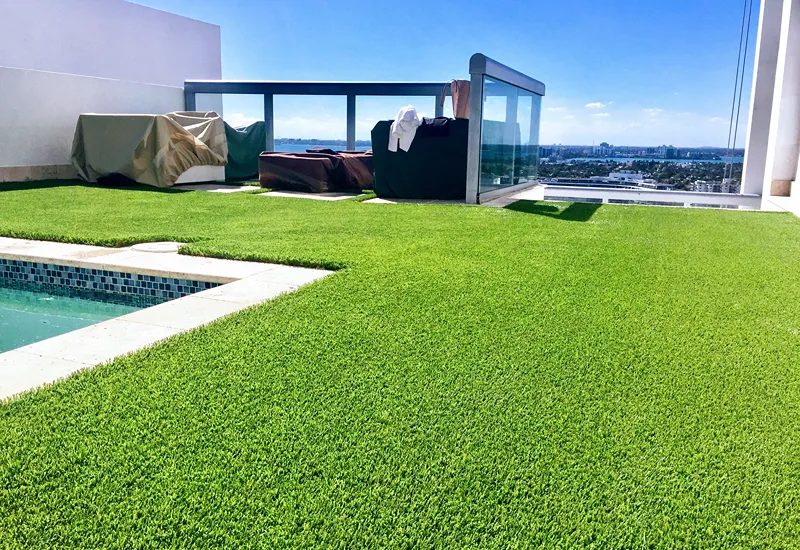
Many Dubai outdoor spaces are simply impossible for natural grass. Balconies, rooftops, terraces, and areas paved with marble or tile have no soil, no drainage, and no way to support a living lawn. Until artificial grass came along, these spaces were hard floors — beautiful but cold, echoey, and unforgiving underfoot.
Artificial grass turns any surface into a green space. A balcony becomes a morning-coffee garden. A rooftop becomes an entertaining space. A paved pool deck becomes safer and softer underfoot. The grass installs over tile, concrete, and even existing paving without excavation, which makes it one of the fastest and most transformative upgrades available to a Dubai apartment or villa owner.
7. It Is Safer for Children and Pets
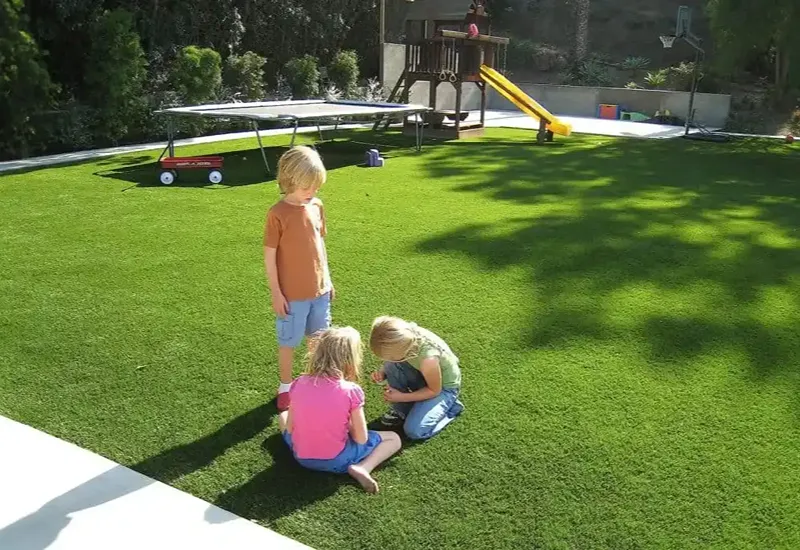
Natural grass in Dubai is often treated with fertilisers, pesticides, and weedkillers — chemicals that most parents would rather their children and pets did not roll in. It also develops bare patches that turn to mud when watered, and mud gets tracked into the house on every foot and paw.
Quality artificial grass is hypoallergenic, non-toxic, and requires no chemical treatments. It drains quickly, so there is no mud after watering or rain. Playground-grade artificial grass with a shock-pad underlay is rated for critical fall height, making it genuinely safer under play equipment than hard tile or compacted sand. For families with crawling babies, playing toddlers, or pets that spend time outdoors, the hygiene and safety argument is compelling.
8. It Looks Immaculate for Every Gathering
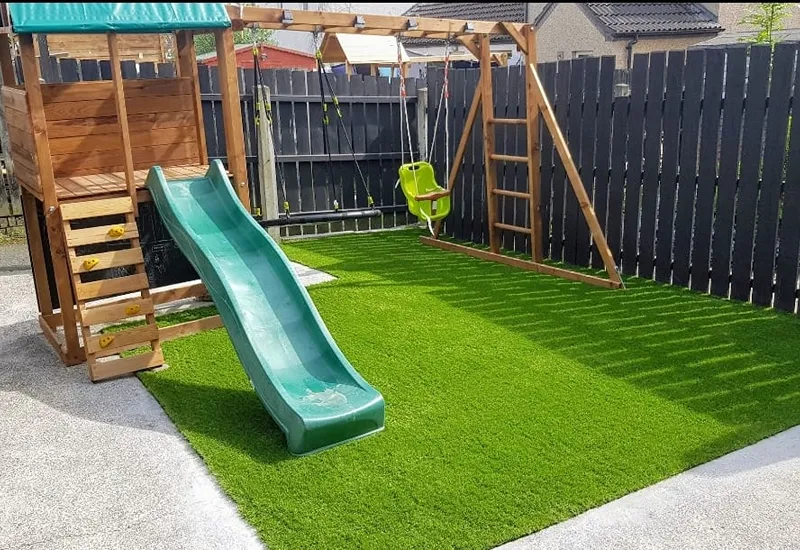
Dubai’s social calendar puts the home on display. Ramadan iftars, Eid open houses, DSF dinners, and weekend barbecues all happen in spaces where the floor is visible to every guest. A natural lawn that has a bare patch, a brown spot, or a muddy strip from the last watering is a visible flaw that no amount of furniture arrangement can hide.
Artificial grass looks the same on the day of the gathering as it did the day it was installed. There are no brown patches, no bare spots, no muddy strips. It photographs beautifully — which matters in a city where every gathering ends up on social media — and it stays immaculate from DSF through Eid with nothing more than a weekly brush. For a hosting season that runs from October to April, the grass is the backdrop to every event.
9. It Lasts 10 to 15 Years in Dubai’s Climate
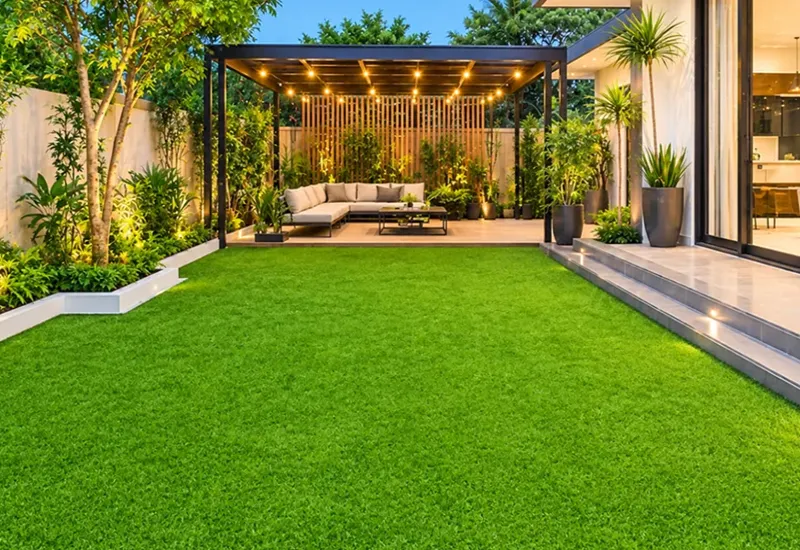
Modern artificial grass is engineered for durability in extreme climates. UV-stabilised polyethylene and polypropylene yarns resist fading under direct sun, the backing tolerates surface temperatures that regularly exceed 50°C in Dubai summers, and the fibre construction handles heavy foot traffic without flattening permanently.
A quality artificial grass installation, professionally fitted and maintained, typically lasts 10 to 15 years in a Dubai residential setting. That is a decade and a half of green lawn with no watering, no mowing, and no re-turfing. Compare that to natural grass, which needs partial or full re-turfing every two to three years in Dubai’s climate, and the long-term value difference is clear. The grass costs more upfront but costs dramatically less over its lifespan.
10. It Aligns With Dubai’s 2040 Sustainability Vision
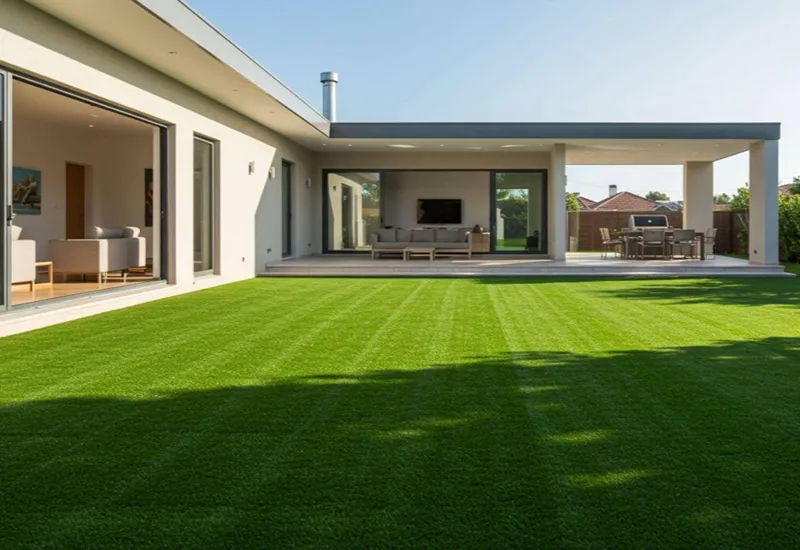
Dubai sits in one of the most water-scarce regions on earth, and the city’s 2040 Urban Master Plan puts sustainability and water conservation at its centre. Every litre of water used to irrigate a domestic lawn is desalinated water — energy-intensive to produce, costly to deliver, and fundamentally unsustainable at the scale that a city full of green lawns would demand. By 2027, DEWA’s water tariffs and conservation incentives have made the environmental cost of a natural lawn not just theoretical but financially measurable.
Artificial grass eliminates the irrigation demand entirely. Over a 10-year lifespan, a 50 square metre artificial lawn saves roughly 750,000 to 1,000,000 litres of water compared to a natural lawn — water that the city simply cannot afford to spend on ornamental grass. For environmentally conscious homeowners, and for a city that is serious about sustainability, this is the most principled reason to make the switch. Landscaping artificial grass is the starting point for a sustainable villa garden.
Quick Reference — The 10 Reasons at a Glance
- Climate: Natural grass dies every Dubai summer; artificial grass holds its colour year-round.
- Water: A 50 sqm natural lawn uses 72,000-108,000 litres per year; artificial grass uses zero.
- Maintenance: No mowing, no gardener, no fertiliser. Weekly brush is all it takes.
- Sand: Sand sits on the surface, removable in minutes — unlike natural grass where it kills the roots.
- Cost: AED 40-95/sqm all-in fitted. Pays for itself in 3-5 years through water and maintenance savings.
- Versatility: Installs on balconies, rooftops, pool decks, and paved areas where grass cannot grow.
- Safety: Hypoallergenic, non-toxic, no mud, no chemicals. Playground-grade available with fall-height rating.
- Appearance: Immaculate for every gathering, photographs beautifully, no patches or brown spots.
- Lifespan: 10-15 years in Dubai’s climate with proper installation and basic maintenance.
- Sustainability: Saves up to 1 million litres of desalinated water over a 10-year lifespan.
Make the Switch
If three or more of these reasons resonate with your situation, the case for switching is clear. The fastest way to move from reading to a green lawn is to see and feel the grass in person, because photographs do not capture the texture, the colour, or the quality difference between a budget product and a premium one.
Browse the shop to see the full range, or visit the showroom at 4th Street, Al Quoz 1, Dubai to feel the grass underfoot. For a free site visit and written quote anywhere in Dubai, call +971 50 637 9229 or use the contact page. Our team brings samples to your home, measures the space, assesses the subfloor, and provides an all-in fitted price with the actual lead time — typically 30 to 45 minutes for a site visit, and one to three days for a standard residential installation.
The switch to artificial grass is not a compromise. It is an upgrade — to a lawn that stays green, saves water, costs less over time, and looks immaculate for every gathering. In a city where natural grass is a fight against the climate, artificial grass is the decision that wins the fight before it starts. — Editor, dubaiartificialgrass.ae/blog