
Artificial Grass vs Real Grass in Dubai: 7 Key Differences
Artificial grass is a synthetic surface designed to resemble a natural lawn, while real grass is a living surface that grows in soil and requires water, sunlight, cutting, and ongoing care.
That distinction becomes particularly important in Dubai. High summer temperatures, strong sunlight, airborne dust, limited rainfall, and irrigation expenses can make maintaining a healthy natural lawn more challenging than in cooler climates.
When comparing artificial grass vs real grass, Dubai property owners should consider more than appearance. Water consumption, surface temperature, installation requirements, annual maintenance, lifespan, drainage, and the intended use of the space can all affect the final decision.
Artificial grass is commonly installed in villa gardens, apartment balconies, rooftop terraces, playgrounds, pet areas, offices, event spaces, and commercial landscapes. Real grass may still be suitable for shaded gardens and carefully maintained villa landscapes with reliable soil and irrigation systems.
This guide compares artificial turf and natural grass across seven important factors. It also explains expected costs, advantages, disadvantages, and the best choice for different residential and commercial properties in Dubai.
What Is Artificial Grass?
Artificial grass, also called synthetic grass or artificial turf, is a manufactured floor covering designed to reproduce the appearance and texture of natural grass.
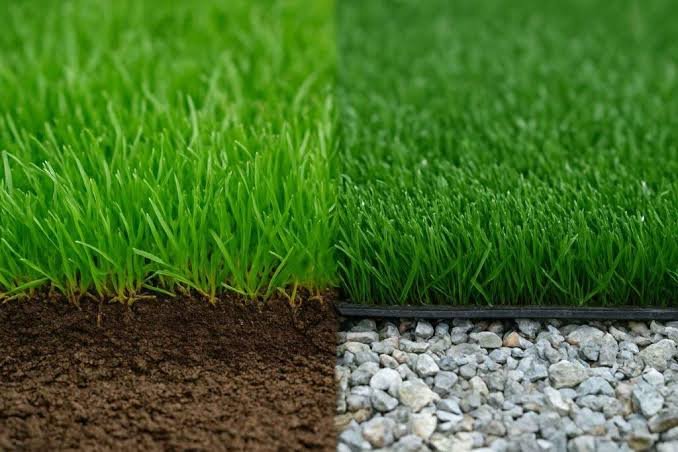
It is generally made using polyethylene, polypropylene, nylon, or a combination of synthetic fibres. These fibres are attached to a backing system that may include drainage holes to allow water to pass through the surface.
Artificial grass can be installed over:
- Compacted aggregate
- Prepared sand bases
- Concrete
- Tiles
- Balconies
- Rooftop surfaces
- Existing hard landscaping
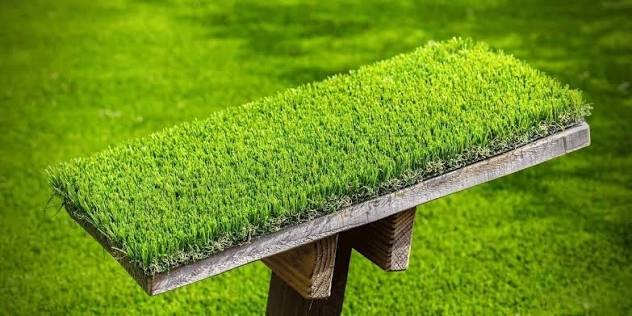
The installation method depends on the location, drainage requirements, expected foot traffic, and condition of the existing surface.
Artificial grass does not require mowing, fertilising, or daily irrigation. However, it still needs basic cleaning, occasional brushing, debris removal, and periodic inspection to maintain its appearance.
Pile heights commonly range from approximately 20 mm to 50 mm. Shorter turf is often selected for balconies, putting greens, and commercial applications, while taller and denser products are usually preferred for villa gardens, play areas, and decorative landscaping.
Main Advantages of Artificial Grass
- Does not require daily irrigation
- Remains visually green throughout the year
- Requires no mowing or fertilising
- Can be installed over concrete and tiles
- Suitable for balconies and rooftop terraces
- Produces no mud after cleaning or rain
- Handles regular foot traffic well
- Available in different pile heights and densities
- Easier to maintain than a natural lawn
- Suitable for residential and commercial applications
What Is Real Grass?
Real grass, also called natural grass, is a living lawn grown from seeds, sod, or turf rolls rooted in soil.
A natural lawn requires suitable soil, sunlight, irrigation, nutrients, cutting, pest management, and regular maintenance. Its condition can change depending on the grass species, season, shade, irrigation system, soil quality, and level of foot traffic.
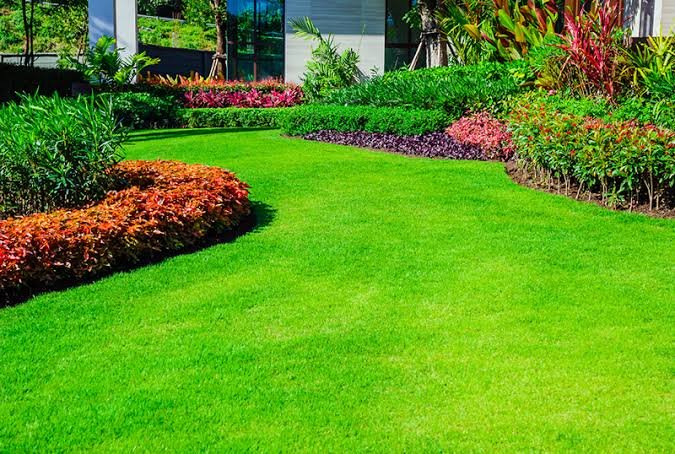
Natural grass can provide a cooler and more organic outdoor surface when it is healthy and properly maintained. It also contributes to soil coverage, natural cooling, and limited habitat support for insects and other small organisms.
However, keeping natural grass consistently green in Dubai normally requires frequent irrigation and professional maintenance, especially during the hottest months.
A natural lawn may be suitable for:
- Shaded villa gardens
- Landscaped courtyards
- Properties with existing irrigation systems
- Low-traffic decorative gardens
- Homeowners who prefer a living landscape
- Areas with suitable soil and drainage
Main Advantages of Real Grass
- Provides a completely natural appearance
- Feels cooler than synthetic turf in direct sunlight
- Supports a living garden environment
- Can contribute to natural surface cooling
- Produces the scent and texture of a real lawn
- Can recover naturally from limited damage
- Integrates well with trees, flower beds, and planted landscapes
Artificial Grass vs Real Grass: Quick Comparison
| Factor | Artificial Grass | Real Grass |
| Material | Synthetic polyethylene, polypropylene, or nylon fibres | Living grass rooted in soil |
| Water Use | No daily irrigation required | Requires frequent irrigation in Dubai |
| Maintenance | Rinsing, brushing, and debris removal | Watering, mowing, edging, fertilising, and pest control |
| Surface Temperature | Can become hot in direct sunlight | Generally remains cooler when healthy and watered |
| Installation | Can be installed over prepared soil, concrete, or tiles | Requires soil, suitable drainage, and often an irrigation system |
| Appearance | Consistent green appearance throughout the year | Appearance changes with weather, watering, and maintenance |
| Mud | Does not produce mud when correctly installed | Can become muddy in wet or overwatered areas |
| Lifespan | Commonly around 8 to 15 years, depending on quality and use | Continues growing but may require repair or replacement |
| Upfront Cost | Usually higher initially | Sod can be cheaper initially, excluding irrigation and soil work |
| Long-Term Cost | Lower routine water and gardening expenses | Higher ongoing water and maintenance expenses |
| Best For | Balconies, rooftops, villas, offices, play areas, and commercial spaces | Shaded gardens with good soil, irrigation, and regular care |
7 Key Differences Between Artificial Grass and Real Grass
1. Water Consumption
Water use is one of the most important differences between artificial and natural grass in Dubai.
Artificial grass does not require daily irrigation. It may only need occasional rinsing to remove dust, sand, pet residue, spills, or airborne debris.
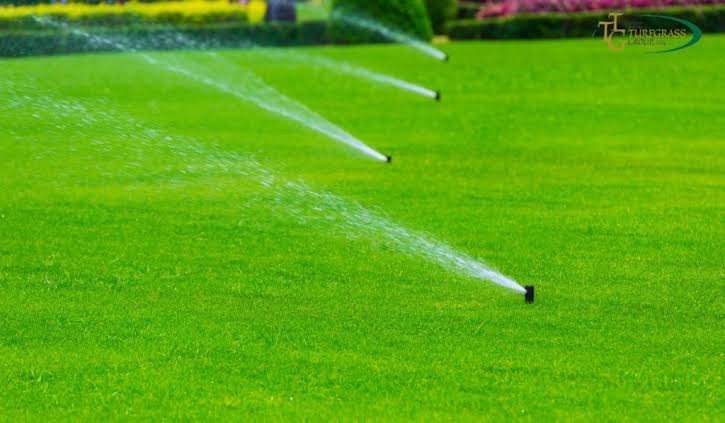
Natural grass requires regular watering to remain green and healthy. During Dubai’s hotter months, irrigation may need to run frequently depending on the grass type, soil, shade, and condition of the lawn.
A large natural lawn can therefore add considerably to a property’s water consumption. The exact cost will depend on the size of the garden, irrigation schedule, water tariff, system efficiency, and whether recycled water is available.
For property owners who want to reduce routine irrigation, artificial grass is generally the more practical option.
2. Heat and Surface Temperature
Dubai’s climate creates challenges for both artificial and natural grass.
Quality artificial grass is normally manufactured with UV-stabilised fibres to reduce fading and material deterioration caused by prolonged sunlight. However, UV resistance does not mean the surface will remain cool.
Artificial grass can become hot when exposed to direct midday sunlight, particularly during summer. Surface temperature can be reduced by:
- Installing turf in partially shaded areas
- Choosing lighter-coloured fibres
- Using suitable infill
- Rinsing the surface before use
- Adding umbrellas, pergolas, or shade structures
- Avoiding barefoot use during peak afternoon heat
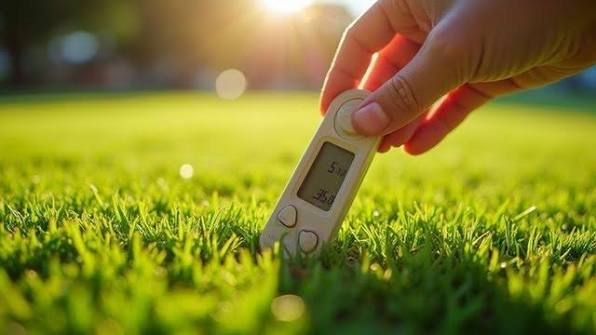
Natural grass generally remains cooler underfoot because it contains moisture and releases heat through natural processes. However, it can turn dry, thin, or brown when it does not receive enough water.
Artificial turf offers more consistent colour, while natural grass usually offers a cooler surface when properly maintained.
3. Maintenance Requirements
Artificial grass is lower maintenance, but it is not completely maintenance-free.
Routine artificial grass maintenance may include:
- Removing leaves and loose debris
- Rinsing dust and sand from the fibres
- Brushing flattened areas
- Cleaning pet waste promptly
- Checking edges and joins
- Removing weeds growing around the perimeter
- Inspecting drainage after heavy cleaning or rain
Natural grass requires a more involved maintenance routine. Depending on the property, this may include:
- Regular irrigation
- Mowing
- Edging
- Fertilising
- Aerating the soil
- Treating weeds
- Managing pests
- Replacing damaged patches
- Maintaining irrigation lines
- Hiring a gardener or landscaping company
Artificial grass is generally more convenient for busy households, rental properties, offices, holiday homes, and commercial spaces where regular gardening is impractical.
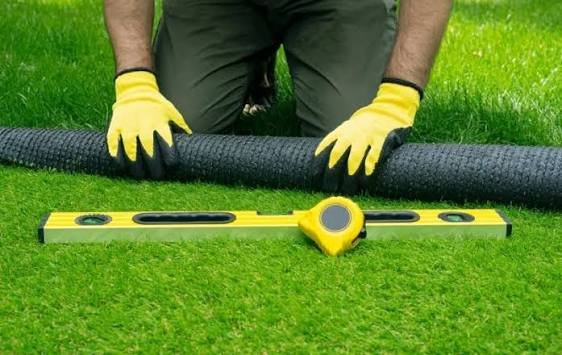
4. Installation Process
Artificial grass and natural grass require different installation methods.
For a villa garden, artificial grass installation may involve:
- Removing the existing surface or vegetation
- Excavating the area where necessary
- Preparing and compacting the base
- Installing a weed-control membrane
- Creating suitable drainage
- Cutting and joining the turf
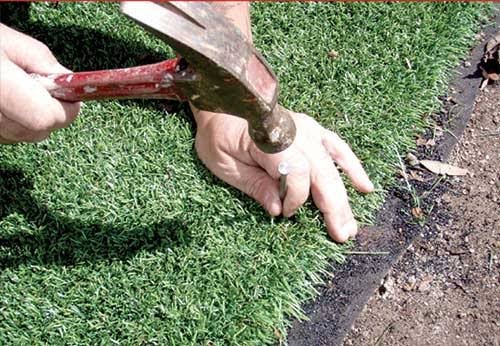
- Securing the edges
- Applying infill when required
- Brushing the fibres into position
Artificial grass can also be installed over concrete, tiles, and balconies using adhesive, joining tape, drainage layers, or other appropriate fixing methods.
Natural grass installation normally involves:
- Testing or preparing the soil
- Removing weeds and debris
- Levelling the ground
- Installing or checking irrigation
- Adding suitable topsoil
- Laying sod or planting seed
- Watering regularly during establishment
- Restricting foot traffic until the lawn takes root
A straightforward artificial grass installation may be completed relatively quickly, while complex gardens, drainage corrections, large areas, and custom layouts can require additional time.
5. Appearance and Feel
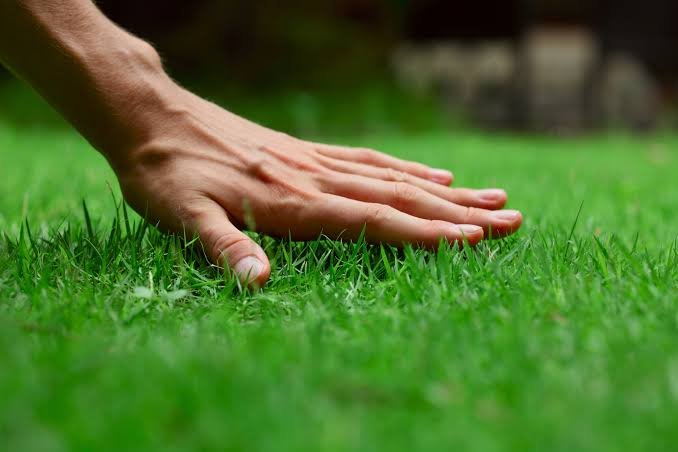
Real grass provides a natural texture, scent, and visual variation that synthetic products cannot reproduce completely.
When properly maintained, natural grass feels soft, cool, and organic. However, its colour and density may change due to heat, irrigation problems, pests, soil conditions, or heavy foot traffic.
Modern artificial grass is designed with mixed fibre colours, varied blade shapes, thatch layers, and different pile directions to create a more natural appearance.
Higher-quality artificial grass may include:
- Multiple shades of green
- Brown or beige thatch fibres
- Different blade heights
- Soft polyethylene fibres
- Dense stitching
- Reduced surface shine
- Realistic blade shapes
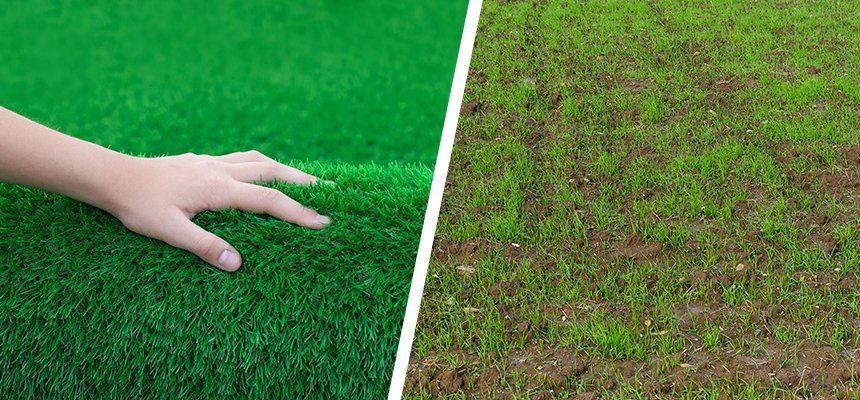
Artificial grass offers a more uniform appearance throughout the year. Real grass provides a genuinely natural surface but requires more effort to maintain consistently.
6. Cost Over Time
Natural grass can appear less expensive initially because sod or grass rolls may cost less than a complete artificial grass installation.
However, the total cost of natural grass may also include:
- Soil preparation
- Irrigation installation
- Water consumption
- Gardening services
- Fertiliser
- Pest treatments
- Mowing equipment
- Replacement patches
- Irrigation repairs
- Seasonal lawn restoration
Artificial grass usually has a higher initial installation cost. Its ongoing expenses are generally limited to cleaning, brushing, minor repairs, and eventual replacement.
The most accurate comparison should consider the total cost over five or more years rather than only the initial material price.
7. Suitability for Different Properties
Artificial grass can be installed in places where a traditional lawn would be difficult or impractical.
It is commonly used for:
- Apartment balconies
- Rooftop terraces
- Villa gardens
- Pool surroundings
- Children’s play areas
- Pet zones
- Office terraces
- Retail displays
- Hotels
- Event spaces
- Schools and nurseries
- Sports and training areas
Real grass requires soil, sunlight, irrigation, drainage, and ongoing care. It is therefore generally better suited to ground-level gardens and landscaped courtyards.
For balconies and rooftops, artificial grass is usually the practical full-surface option because it can be installed over an existing hard floor without creating a conventional soil-based lawn.
Artificial Grass vs Real Grass: Which Is Better in Dubai?
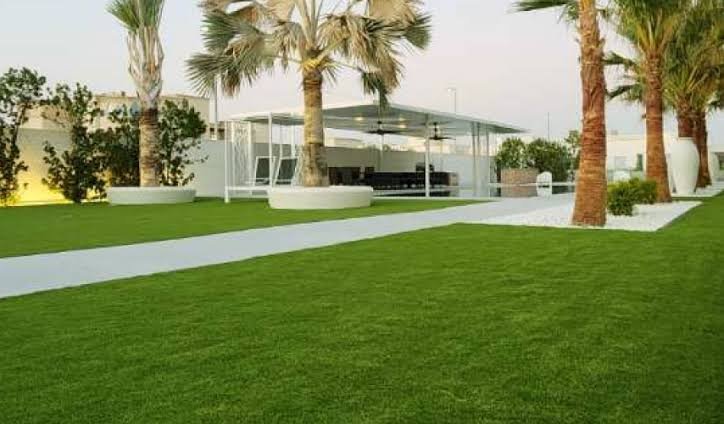
Artificial grass is generally the more practical choice for Dubai properties where water conservation, low maintenance, year-round appearance, and installation flexibility are priorities.
Real grass may be the better option when the property owner wants a living landscape, has suitable soil and irrigation, and is prepared to invest in regular gardening.
| Property or Situation | Recommended Option | Reason |
| Villa without an irrigation system | Artificial grass | Avoids installing and operating daily irrigation |
| Apartment balcony | Artificial grass | Can be installed over tiles or concrete |
| Rooftop terrace | Artificial grass | Provides a green appearance without a conventional lawn |
| Shaded courtyard with irrigation | Real grass or artificial grass | Both may work depending on maintenance expectations |
| Pet-friendly garden | Pet-friendly artificial grass | Mud-free and easier to rinse when correctly installed |
| Children’s play area | Artificial grass with suitable shock padding | Provides a consistent surface and can be combined with safety underlay |
| Hotel or office landscape | Artificial grass | Offers a uniform appearance with lower routine maintenance |
| Low-traffic decorative garden | Real grass | Suitable where natural landscaping is the priority |
| Football or training area | Sports-grade artificial turf | Designed to tolerate repeated use |
| Poolside area | Artificial grass | Provides drainage and avoids mud around the pool |
| Property used seasonally | Artificial grass | Does not require constant lawn care while unoccupied |
| Environmentally managed planted garden | Real grass | Can support a broader living landscape when responsibly maintained |
Artificial Grass vs Real Grass Cost in Dubai
The figures below are indicative estimates. Actual prices depend on product quality, surface condition, site access, drainage, base preparation, garden size, irrigation requirements, and installation complexity.
| Cost Item | Artificial Grass | Real Grass |
| Material or Supply | Approximately AED 28–70+ per sq. metre | Approximately AED 15–40+ per sq. metre for sod |
| Installation | Approximately AED 30–50+ per sq. metre | Approximately AED 20–35+ per sq. metre, excluding major irrigation work |
| Irrigation System | Not normally required | May require a separate installation cost |
| Routine Watering | No daily watering | Ongoing water expense |
| Routine Maintenance | Rinsing, brushing, and occasional repairs | Mowing, fertilising, edging, pest treatment, and gardening |
| Expected Lifespan | Commonly around 8–15 years | Living surface that may need regular repair or partial replacement |
| Long-Term Cost Pattern | Higher initial cost and lower routine expense | Lower initial material cost and higher ongoing expense |
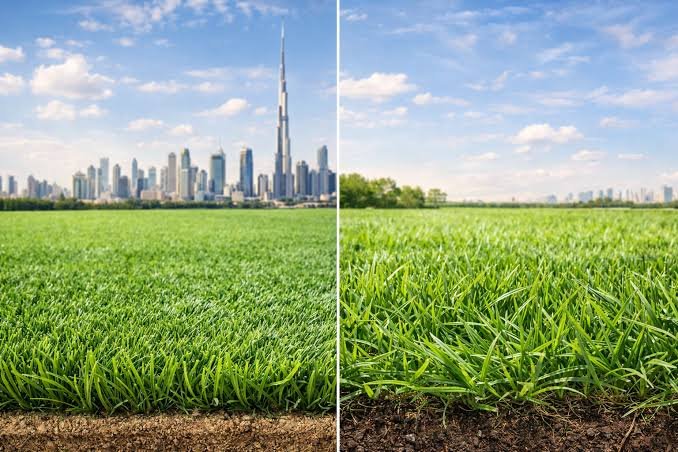
Example: 50-Square-Metre Villa Garden
For a 50-square-metre area, artificial grass may require a larger upfront investment for surface preparation, materials, joining, fixing, and installation.
Natural grass may cost less at the beginning if the property already has suitable soil and irrigation. However, water, gardening, fertiliser, mowing, pest control, and irrigation repairs can increase the total cost over time.
Because every garden has different conditions, property owners should request an on-site measurement and written quotation before comparing the two options.
Does Artificial Grass Get Too Hot in Dubai?
Artificial grass can become hot in direct summer sunlight. It should not be described as heat-proof or permanently cool.
The level of heat depends on:
- Fibre colour
- Material quality
- Pile density
- Infill type
- Air circulation
- Duration of direct sunlight
- Shade coverage
- Surface beneath the turf
For balconies, play areas, and pool surroundings, shade should be considered as part of the overall design.
Rinsing the surface can provide temporary cooling. However, children and pets should not use any outdoor flooring barefoot during peak summer heat without checking its temperature first.
Natural grass is generally cooler when healthy and sufficiently watered, but maintaining that condition requires regular irrigation.
Which Option Is Better for Balconies?
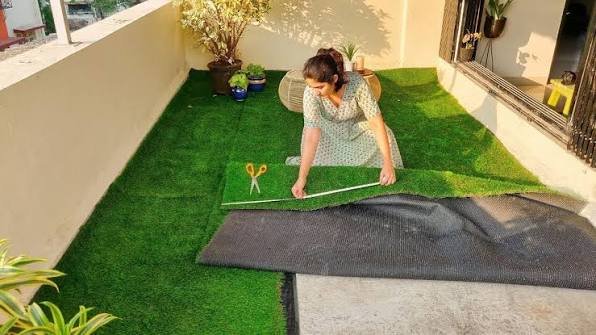
Artificial grass is normally the better option for apartment balconies because it can be installed over concrete or tiled surfaces.
Balcony artificial grass can:
- Improve the appearance of the outdoor area
- Add softness over hard flooring
- Create a garden-inspired setting
- Be cut around drains and corners
- Work with outdoor furniture
- Be removed or replaced when necessary
The installation must allow water to reach the existing balcony drain. Blocking drainage can lead to trapped moisture, odours, and water accumulation.
Natural grass cannot normally be installed as a complete balcony lawn without substantial soil depth, waterproofing, drainage, weight assessment, and specialist landscaping. Small areas of natural grass may still be grown in planters or containers.
Which Option Is Better for Pets?
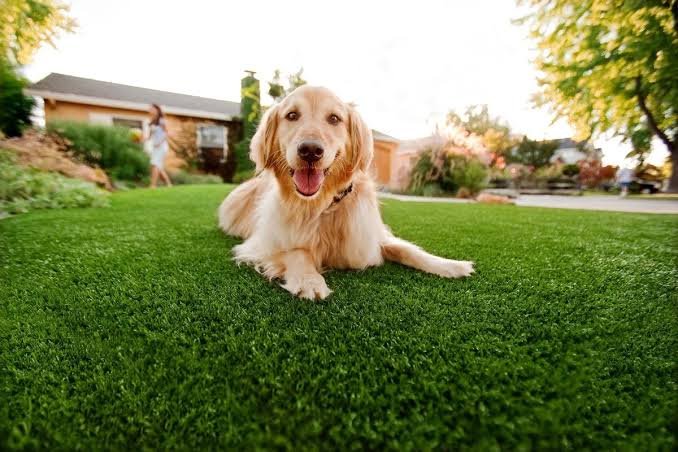
Pet-friendly artificial grass can be a practical option for dogs and other household pets when it is installed with effective drainage.
Its advantages include:
- No muddy patches
- No holes caused by digging in soil
- Easy removal of solid waste
- Ability to rinse the surface
- Consistent appearance
- Resistance to heavy use
However, pet installations need proper drainage and regular cleaning. Urine residue should be rinsed, and an appropriate artificial grass cleaner or enzyme treatment may be needed to prevent odours.
Natural grass is cooler and natural underfoot, but pet urine, digging, and repeated activity can cause yellow patches, bare areas, and mud.
Environmental Considerations
Neither artificial grass nor real grass has a completely impact-free environmental profile.
Environmental Advantages of Artificial Grass
- Reduces routine irrigation
- Eliminates mowing equipment
- Reduces the need for fertilisers and pesticides
- Avoids repeated replacement of damaged natural lawn patches
- Can reduce water demand in large landscaped areas
Environmental Limitations of Artificial Grass
- Manufactured from synthetic materials
- Can contribute to surface heat
- Does not provide the same habitat as living plants
- Requires disposal or recycling at the end of its lifespan
- May use infill and backing materials that require responsible handling
Environmental Advantages of Real Grass
- Provides a living surface
- Helps cool the immediate area
- Supports limited soil and insect activity
- Absorbs some carbon while growing
- Integrates with planted landscapes
Environmental Limitations of Real Grass in Dubai
- Can require substantial irrigation
- May require fertilisers and pest treatments
- Needs powered or fuel-based maintenance equipment
- Can generate green waste
- May need repeated replacement in damaged areas
A balanced landscape may combine artificial grass with native or drought-tolerant plants, shaded areas, planters, permeable surfaces, and efficient irrigation.
AstroTurf vs Artificial Grass: Is There a Difference?
“AstroTurf” was originally a brand name associated with synthetic sports surfaces. Over time, people began using “astroturf” as a general term for artificial grass.
Today, artificial grass is a broad category that includes:
- Residential landscaping turf
- Balcony grass
- Pet-friendly turf
- Playground turf
- Football turf
- Golf putting surfaces
- Exhibition grass
- Decorative commercial turf
The main differences are not simply the name. Products vary by pile height, fibre material, density, backing, drainage, softness, infill requirements, and intended use.
A short, tightly constructed sports turf will perform differently from a soft 40 mm landscaping product designed for a villa garden.
Artificial Turf vs Natural Grass for Commercial Properties
Commercial spaces generally require a surface that remains presentable under regular use.
Artificial turf is commonly selected for:
- Hotels
- Restaurants
- Office terraces
- Schools
- Nurseries
- Retail displays
- Event venues
- Commercial entrances
- Sports facilities
- Exhibition stands
Its consistent appearance and reduced gardening requirements can make it easier to manage across busy commercial environments.
Natural grass may be appropriate for landscaped hotel grounds, shaded courtyards, resorts, and premium developments with dedicated gardening and irrigation teams.
The final choice should account for foot traffic, safety, drainage, fire requirements, accessibility, maintenance resources, and the intended visual appearance.
Frequently Asked Questions
Is Artificial Grass Better Than Real Grass in Dubai?
Artificial grass is generally more practical for Dubai properties where reducing water use, gardening, mud, and routine maintenance is important.
Real grass may be better for property owners who want a living landscape, prefer a cooler natural surface, and have reliable irrigation and professional maintenance.
Does Artificial Grass Survive Dubai’s Summer Heat?
Quality UV-stabilised artificial grass is designed to resist fading and deterioration from sunlight. However, the surface can still become hot in direct summer sun.
Shade, suitable product selection, infill, and temporary rinsing can help manage surface temperature.
Can Real Grass Survive in Dubai?
Yes, real grass can grow in Dubai when it receives suitable irrigation, soil preparation, sunlight, fertilisation, and maintenance.
It is unlikely to remain consistently green through summer without regular watering.
How Long Does Artificial Grass Last in Dubai?
Quality artificial grass commonly lasts approximately 8 to 15 years. Actual lifespan depends on product quality, installation, UV exposure, foot traffic, cleaning, drainage, and maintenance.
Commercial and sports installations may wear more quickly because they receive heavier use.
Can Artificial Grass Be Installed on a Balcony?
Yes. Artificial grass can be installed over balcony tiles or concrete when the surface is stable and drainage remains unobstructed.
The installation method should account for the balcony’s slope, drain location, waterproofing, and building requirements.
Is Artificial Grass Safe for Children?
Artificial grass can be suitable for children when the correct product and installation system are used.
For playgrounds and active play areas, a suitable shock-absorbing underlay may be needed. The surface temperature should always be checked before children play barefoot during hot weather.
Is Artificial Grass Suitable for Dogs?
Yes. Pet-friendly artificial grass can be suitable for dogs when it includes effective drainage and is cleaned regularly.
Solid waste should be removed promptly, and the area should be rinsed and treated when necessary to prevent odours.
Which Is Cheaper: Artificial Grass or Real Grass?
Natural grass may cost less initially, particularly when suitable soil and irrigation already exist.
Artificial grass often costs less to maintain over the long term because it does not require daily watering, mowing, fertilising, or frequent gardening.
Does Artificial Grass Need Maintenance?
Yes. Artificial grass needs less maintenance than a natural lawn, but it still requires rinsing, debris removal, brushing, stain treatment, edge inspection, and occasional professional cleaning.
Can Weeds Grow Through Artificial Grass?
Weeds are less likely when the ground is properly prepared and a suitable weed-control membrane is installed.
Small weeds may still appear around edges, joins, drainage points, or areas where organic debris has accumulated.
Does Artificial Grass Drain Water?
Most landscaping artificial grass includes perforations that allow water to pass through the backing.
Effective drainage also depends on the prepared base, surface slope, installation method, and condition of the existing drains.
Can Artificial Grass Be Installed Around a Swimming Pool?
Yes. Artificial grass can be installed around swimming pools when the product and base provide suitable drainage.
The area should be designed to minimise standing water, movement, and excessively hot surfaces.
Key Takeaways
- Artificial grass is synthetic, while real grass is a living lawn rooted in soil.
- Artificial grass does not require daily irrigation.
- Natural grass generally remains cooler when healthy and watered.
- Artificial turf can become hot in direct Dubai sunlight.
- Artificial grass requires less routine maintenance but is not maintenance-free.
- Real grass requires watering, mowing, fertilising, and ongoing gardening.
- Artificial grass can be installed on balconies, rooftops, concrete, and tiles.
- Natural grass is most suitable for ground-level gardens with soil and irrigation.
- Artificial grass normally has a higher upfront cost and lower ongoing expenses.
- Natural grass may cost less initially but can be more expensive to maintain.
- The best choice depends on the property, budget, usage, shade, drainage, and maintenance expectations.
Get Artificial Grass Installation in Dubai
Dubai Artificial Grass supplies and installs artificial grass for residential and commercial properties across Dubai.
Available applications include:
- Villa gardens
- Apartment balconies
- Rooftop terraces
- Pool surroundings
- Children’s play areas
- Pet-friendly gardens
- Offices and commercial spaces
- Hotels and restaurants
- Schools and nurseries
- Sports and training areas
Visit https://dubaiartificialgrass.ae/ or call +971 50 637 9229 to request a free measurement and installation quotation.